12 November 2021
The Postsecondary Digital Skills Readiness Assessment tools are ready
AlphaPlus and the College Sector Committee for Adult Upgrading developed assessment tools that assess learners’ digital skills readiness for transition…
Solutions
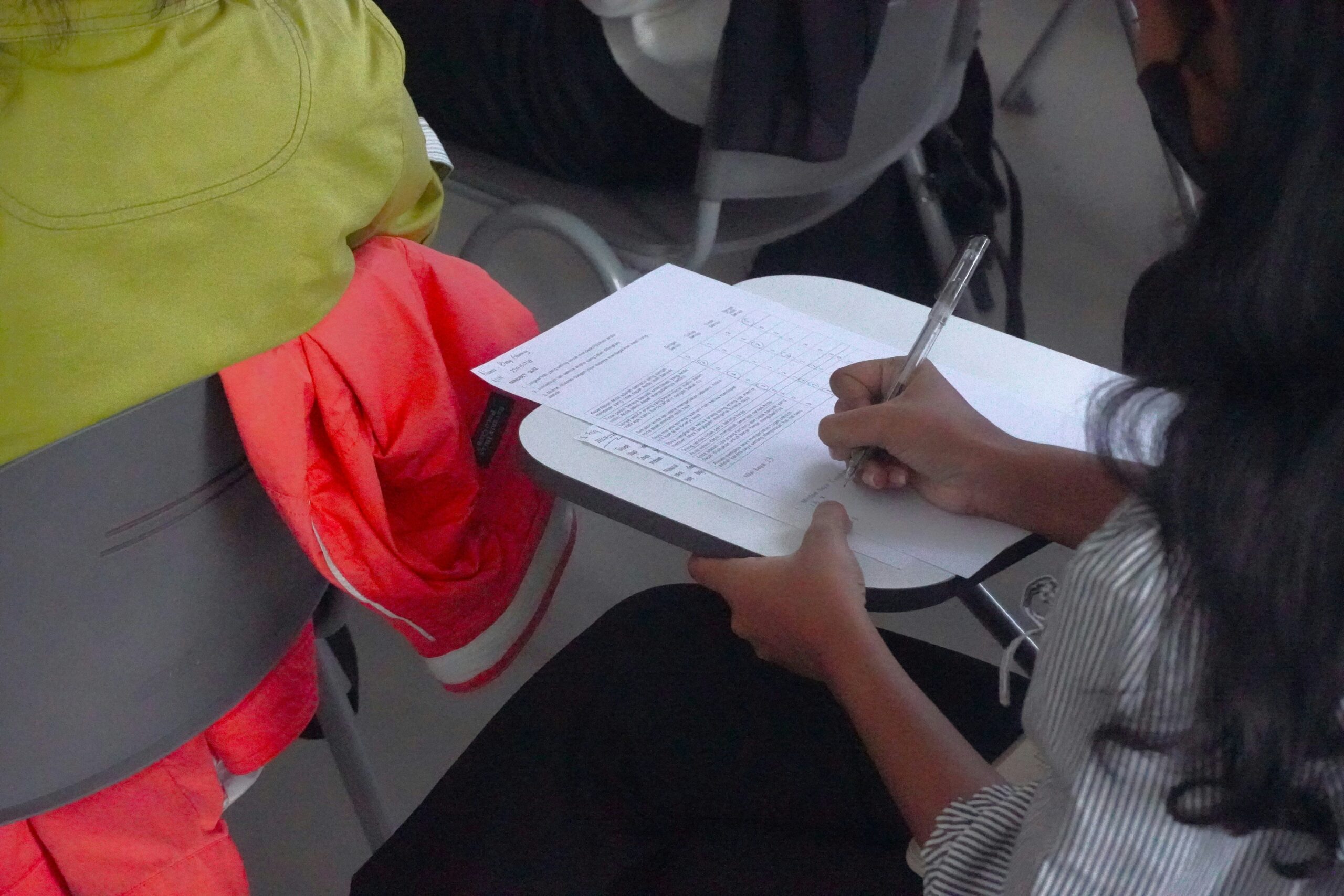
What high-stakes tests are used in adult education programs and how do they influence instruction? How do they help or hinder our understanding of literacy and numeracy development and instruction?
We started thinking more about testing, and assessment in general, while analyzing the new Canadian Adult Education Credential (CAEC). Our analysis led to a report and, more recently, an online guide for instructors. (Please join us for an orientation to the guide on December 3 from 3 to 4 p.m.)
The introduction of the CAEC presents new opportunities for learners. Here are some positive features of this new secondary equivalency credential:
While there are positives, we also recognize that CAEC raises challenges. Many learners encounter digital inequities and are disadvantaged by the move to computer-based testing. Educators need professional development, opportunities to share knowledge and online resources they can use with their learners. As a field, we also need to recognize we’re faced with yet another testing model.
Assessment in the adult learning system is complex, involving three distinct sectors, each with its own testing priorities. Layered over the sectoral approaches is the funder’s accountability testing, which operates separately.
Learners could encounter multiple high-stakes tests as they move from one sector to another and within a sector. Programs also use a variety of non-standardized tests and assessment protocols (e.g. observation, projects, program-developed tests, essays) to place learners in courses, monitor literacy and numeracy abilities, and determine readiness for further learning and earning opportunities.
Although the stated aim of accountability testing is to provide information about progress and goal completion, this aim hasn’t been validated. Previous analysis, and more importantly, the field’s approach to assessment and instruction, indicate the tests don’t actually provide useful feedback. Most programs across all sectors manage two distinct instructional and assessment systems: one for accountability and one to help learners develop particular literacy and numeracy abilities to meet their goals.
The layering of accountability testing overtop of sectoral testing not only increases administrative burdens and workloads for instructors and program administrators, but it also complicates an already complex system. Does accountability testing actually align with other high-stakes tests such as the Accuplacer used for college admission or the Ontario Secondary School Literacy Test, a high school graduation requirement?
With numerous high-stakes tests in use, all operating in distinct ways and producing results that are challenging to compare, we’re at risk of preparing learners only for the tests.
We’re also at risk of allowing tests to co-ordinate our teaching practices. This could have detrimental effects for learners if they don’t have access to sound literacy and numeracy instruction that connects to their experiences and goals.
As educators, what do we really want to learn through assessment? If our priority is helping learners achieve their goals — whether that means passing a test, doing well in a specific course or helping their kids with homework — then we need to know:
But there’s a lack of co-ordination and discussion about these questions, and we’d like to change that.
Do you have thoughts you’d like to share about assessment? We’d like to hear them and work together to build a more co-ordinated and thoughtful approach to assessment.
Please join us for an initial discussion on January 7 from 3 to 4 p.m. Register here to share your assessment-related experiences, challenges, work-arounds and solutions.
18 November 2025
Subscribe to our email updates to learn what’s next for AlphaPlus and for digital technology in adult literacy education.